

What Does Creatine Support Besides Muscle?
Creatine is best known for exercise and muscle, but that is not the whole story. The brain also uses creatine to help manage energy, so research has examined whether supplementation may support memory and attention in some situations. The evidence is promising in places, but it does not make creatine a stimulant or a guaranteed cognitive enhancer.
Article Highlights
- Creatine supports cellular energy: muscle uses it during repeated effort, and the brain uses the same energy-buffering system.
- Human cognition findings are mixed: some trials report better memory or processing, while overall executive function is less consistent.
- Creatine is not a jolt of energy: it does not work like caffeine, and research does not establish an instant focus effect.
- The useful decision is practical: consider whether a consistent routine supports your training, daily capability, or both.
A Creatine Routine for More Than the Gym
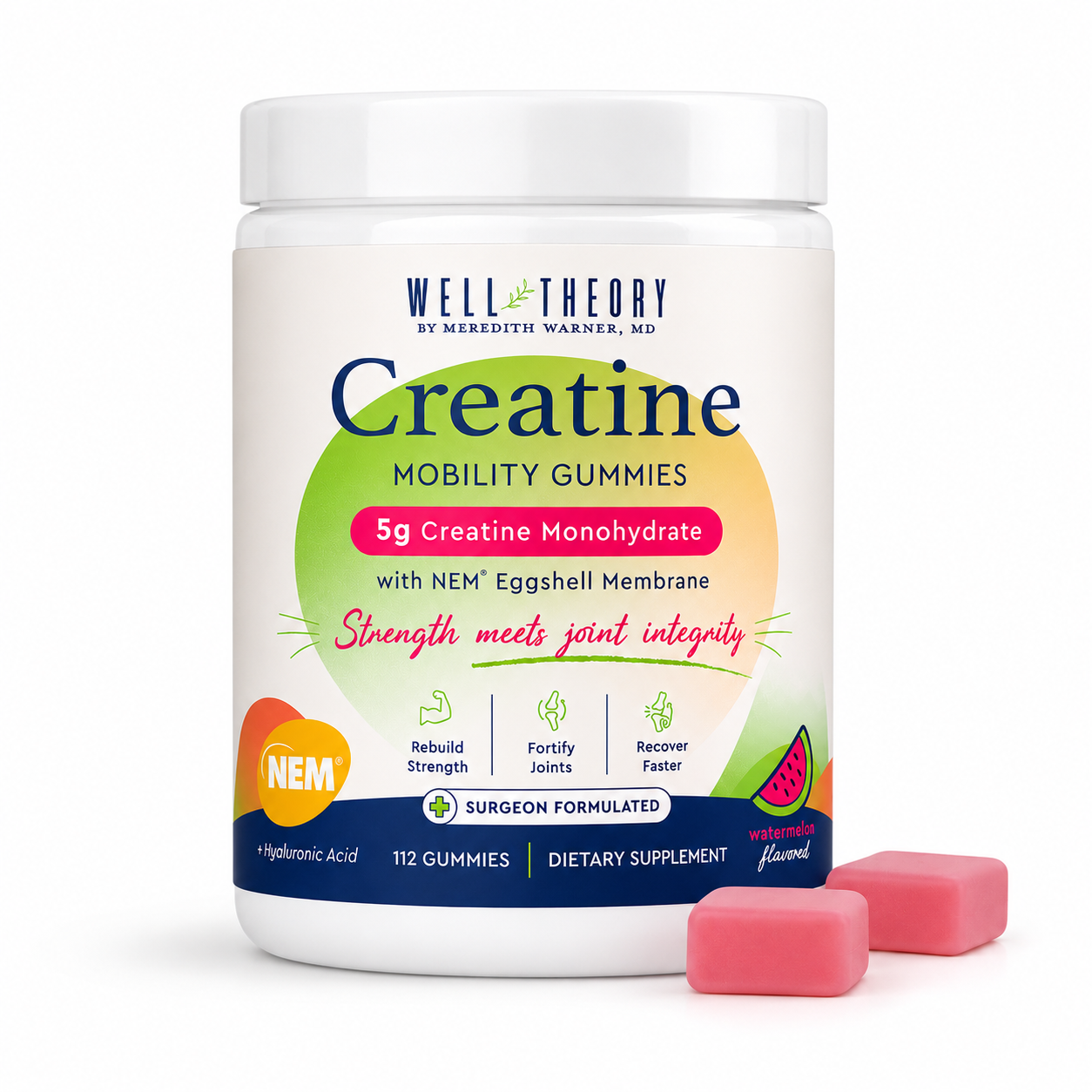
The formula featured here combines 5 g of creatine monohydrate with 500 mg of NEM eggshell membrane in four watermelon gummies. The creatine is the ingredient relevant to the brain-energy question; the additional ingredients are included for the formula’s broader muscle and mobility positioning.
Creatine + NEM Mobility Gummies may fit someone who wants a measured creatine serving in a form that is easier to keep taking than a tub and scoop. It is not a substitute for food, sleep, resistance training, or medical care.
What is phosphocreatine? Phosphocreatine is a small, rapidly available energy reserve inside cells. It helps recycle ATP, the molecule cells use for immediate work, during activities such as a hard set of squats or a demanding burst of brain activity.
How Does Creatine Support the Brain?
Creatine helps buffer energy demand rather than acting as a stimulant. Brain cells need a steady supply of ATP for signaling, attention, memory formation, and other routine work. The brain makes and uses creatine, and creatine from food or supplements can contribute to the body’s total creatine pool.
The mechanism is an energy buffer, not an alertness switch. That distinction explains why a person should not expect the immediate sensation associated with coffee. A supplement can support a biological reserve without producing a noticeable rush.
Researchers have proposed that supplementation may be more noticeable when demand is higher or intake is lower, but human results vary by age, diet, sleep, baseline creatine status, dose, and test used. A 2024 systematic review and meta-analysis found possible benefits for memory and some attention or processing outcomes, while results for broad cognition and executive function were less consistent.
Can Creatine Help With Focus or Mental Energy?
Creatine may be worth considering as part of a steady routine, but the evidence does not justify treating it like a focus supplement. Trials have measured memory, attention, processing speed, and executive function separately, and those outcomes do not all move together.
| What you want from the day | What creatine may contribute | What it cannot promise |
|---|---|---|
| Training or repeated physical effort | A larger creatine-phosphocreatine reserve that supports rapid energy recycling in muscle. | A guaranteed increase in strength without training, adequate food, and recovery. |
| Long periods of mental work | Support for normal brain energy metabolism, with some human studies showing selected memory or processing benefits. | An instant stimulant effect or reliable improvement in every cognitive test. |
| A simpler supplement routine | A consistent daily serving when the form is easy to take. | Proof that the finished product has been tested in the same way as every individual ingredient. |
For a person choosing between coffee, a complex focus blend, and creatine, the question is the job. Coffee is designed to increase alertness through caffeine. A focus blend may combine several ingredients with different evidence and tolerability. Creatine is the slower, quieter option: a nutrient involved in energy handling that may suit someone who also values exercise support and routine simplicity.
Who Might Notice a Difference From Creatine?
No single profile guarantees a response. Baseline diet and total creatine intake matter because people who consume little creatine from food may start from a different reserve than people who regularly eat meat or fish. Age, training status, sleep, hydration, and the outcome being measured also change the question.
- If exercise is part of the plan: judge creatine alongside training consistency and recovery, not as a stand-alone performance promise.
- If mental energy is the concern: protect sleep and regular meals first, then treat creatine as a possible support for normal energy metabolism rather than a rescue for exhaustion.
- If adherence is the barrier: a gummy can be practical when a powder and scoop repeatedly disappear from the routine.
Creatine’s role in strength and joint mobility is a separate question from its possible cognitive role, but the two can belong to the same everyday-capability plan. Eggshell membrane and everyday joint mobility is another distinct question, centered on NEM rather than creatine. A consistent routine is more useful than a supplement that looks ideal on paper and sits unopened in a cabinet.
The Bottom Line
Creatine supports the body’s rapid energy-buffering system in muscle and brain. Human research suggests possible benefits for selected memory, attention, or processing outcomes, but the cognitive evidence is not uniform and does not establish a stimulant-like effect.
Your next decision is simple: if you want creatine for training and are curious about its broader role, choose a form you can take consistently, keep sleep and food in the plan, and judge the routine by ordinary function rather than by a promised feeling.
Frequently Asked Questions
What does creatine do besides build muscle?
Creatine helps cells buffer and recycle energy, and the brain uses this same system. Human studies have examined memory, attention, and processing, with possible benefits in some outcomes but inconsistent results overall.
Does creatine give you mental energy like caffeine?
No. Creatine is involved in cellular energy metabolism, but it is not a stimulant and should not be expected to create an immediate alertness response like caffeine.
Can creatine support memory?
Some controlled trials and reviews report benefits for selected memory outcomes, while other cognitive measures are less consistent. The evidence does not establish that creatine improves memory for every person.
Is creatine only useful if you lift weights?
No. Creatine is involved in normal energy handling throughout the body, including the brain. Exercise remains an important context for its best-established use, and supplementation does not replace regular movement or strength training.
Sources
