

Everyday Comfort
Rest Is a Nutrient Too
The workout gets a place on the calendar. Bedtime gets whatever is left over. That division of attention is backwards, because the body does some of its most useful work overnight: consolidating memory, repairing ordinary muscle wear, and resetting the systems that keep energy steady the next day. Treat rest like an input instead of an afterthought and the whole routine starts to make more sense.
Key Takeaways
- Sleep is an active maintenance state, not downtime. Memory consolidation, muscle repair, and healthy inflammatory balance all run on the night shift.
- Falling asleep has a physical trigger: core body temperature drops about one degree. Anything that supports that shift supports the transition into rest.
- Glycine, a simple amino acid, has been studied at 3 grams before bed for subjective sleep quality and next-day alertness.
- Melatonin has been examined in pooled analyses of randomized trials, which found modest reductions in the time it takes to fall asleep.
- A wind-down routine works best as a calendar slot, the same way a workout does. The formula supports the routine; it does not replace it.
Make bedtime part of the plan
Most supplement routines are built for the morning: a multivitamin with coffee, a joint formula with breakfast, everything engineered for the productive half of the day. The other half of the day rarely gets a formula. It gets a hope.
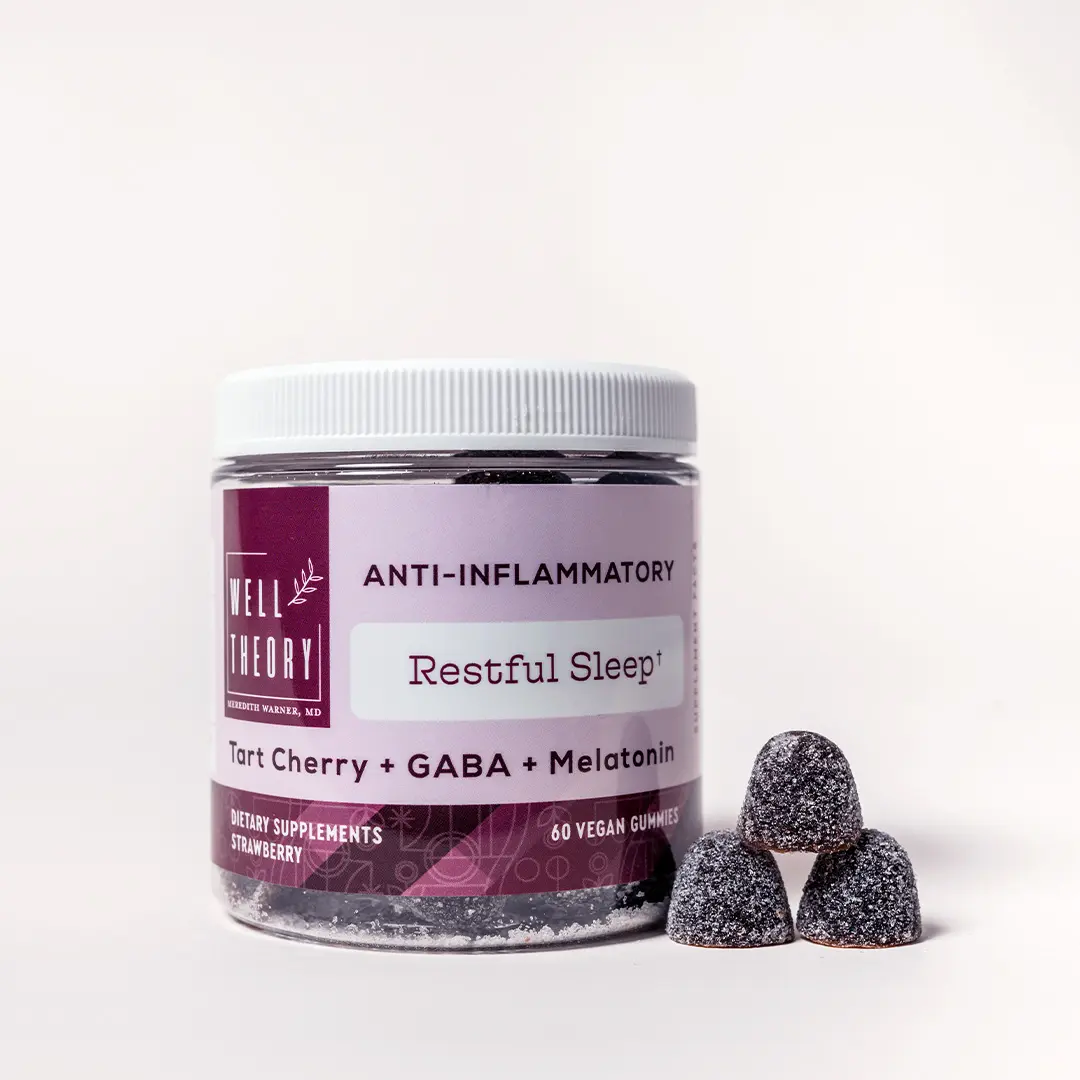
Restful Sleep Gummies were formulated to give bedtime the same engineering attention. Each serving combines 5 mg of melatonin with tart cherry, GABA, and chamomile in a strawberry-flavored gummy, 60 per bottle, vegan and gluten free. The goal is support for restful sleep and a calmer transition into the nighttime routine, not a knockout dose of anything.
Honest expectations matter here. Responses vary, and the point of daily use is to support the body’s own transition into rest, not to force a particular bedtime. Anyone expecting an off switch should probably save their money.
Sleep pressure: the building drive to sleep that accumulates across the day as a molecule called adenosine accumulates in the brain. Caffeine does not remove sleep pressure. It blocks the receptor that registers it, which is why the tiredness is still waiting when the coffee wears off; the companion piece on the 3 o’clock wall and afternoon energy covers what that trade costs at night., which is why the tiredness is still waiting when the coffee wears off.
What the body actually does at night
Sleep is not the pause between days. It is a scheduled maintenance window, and the schedule is precise. Deep sleep early in the night is when the largest pulses of growth hormone are released, supporting the everyday repair of muscle and connective tissue worked during the day. Later cycles lean toward rapid eye movement sleep, when the brain files the day’s information into long-term memory.
The transition into sleep has a physical signature most people have never heard about: core body temperature drops by roughly one degree. Blood flow shifts toward the hands and feet, dumping heat, and that internal cooling is part of the signal that initiates sleep. This is a real mechanism, not a metaphor, and it is the reason a cool room and a consistent wind-down are more than folk advice.
Research published in Frontiers in Neurology and PLoS ONE has examined how specific nutrients interact with these systems, and two of them are worth knowing by name.
Glycine: the simplest amino acid, doing quiet work
Glycine is the smallest amino acid the body uses, small enough to act as a chemical messenger in the brain. Japanese researchers became curious about it in the 2000s and ran a series of small human trials. In a study published in Sleep and Biological Rhythms and in follow-up work in partially sleep-restricted volunteers, 3 grams of glycine taken before bed was associated with better subjective sleep quality and, the next morning, less reported fatigue and better performance on cognitive tests.
The mechanism researchers propose fits the temperature story above: glycine appears to promote heat loss through the extremities, supporting the core temperature drop that is part of normal sleep onset. Later animal research pointed to receptors in the brain’s master clock, the suprachiasmatic nucleus, as part of the pathway. The human trials are small and the effect is modest, which is worth saying plainly. Modest and real is still better than dramatic and invented.
Melatonin belongs in the same honest category. A 2013 meta-analysis of randomized placebo-controlled trials in PLoS ONE pooled the results and found that melatonin reduced the time it takes to fall asleep by about 7 minutes on average and modestly improved reported sleep quality. Not a sedative. A signal, timed.
A single ingredient with a single job
For anyone building a nighttime routine one piece at a time, The Well Theory also offers glycine on its own. One ingredient, clearly labeled, no proprietary blend hiding the dose. That kind of label makes it easy to know exactly what is going into the evening and easy to notice what, if anything, changes over 60 days of consistent use.

The Bottom Line
Rest behaves like a nutrient. The body budgets for it, builds repair around it, and runs measurably worse without it. The evening deserves the same deliberate treatment as the morning: a consistent start time, a cool room, a real wind-down, and, for those who want one, a formula that supports the transition rather than promising to replace it. Glycine and melatonin are two of the better-studied pieces of that picture, and both reward modest expectations held consistently over months rather than miracles demanded by Friday.
Frequently Asked Questions
What does glycine do at bedtime?
Research has examined 3 grams of glycine before bed for supporting subjective sleep quality, normal sleep onset, and next-day alertness. The proposed mechanism involves heat loss through the extremities, which supports the natural drop in core body temperature that is part of falling asleep. Studies are small and results are modest.
How much melatonin is in Restful Sleep Gummies?
Each serving provides 5 mg of melatonin, combined with tart cherry, GABA, and chamomile. The full amounts are listed on the label.
Can glycine and melatonin be taken together?
They work through different pathways, and both have been studied for sleep support. As with any combination, anyone taking medication or managing a health condition should review new supplements with a qualified healthcare professional first.
When is the best time to take a nighttime formula?
Research on melatonin timing suggests taking it well before the intended bedtime rather than at it, as part of a wind-down that starts the night on purpose. The routine is the schedule. The formula is a passenger.
How long before noticing anything?
Dr. Warner’s standard is 90 days of daily use before judging a supplement, paying attention to the transition into sleep and how the days feel. No supplement promises a particular result by a particular date, and anything that does should be read with suspicion.
Related: For a clearer look at melatonin as a timing signal, read Melatonin: How It Actually Works and When It Stops.
