
The 3 a.m. Wake-Up Audit.
A 7-question checklist by orthopedic surgeon Dr. Meredith Warner to identify whether your overnight wake-ups are sleep architecture or inflammation. And what to do about it tonight.
Take the Audit NowWhat you'll learn in this guide
- The 7 questions that tell you which kind of insomnia is yours
- The biological reason most "sleep fixes" don't work after 50
- The 4-ingredient sleep stack with the strongest clinical evidence
- When it's time to stop guessing and get a sleep panel
Why your eyes open at 3 a.m.
Most overnight wake-ups trace back to one of five causes. The audit below tells you which one is yours. The mechanism tells you why standard sleep advice keeps missing it.
Cortisol Rhythm
A normal pre-dawn cortisol rise becomes a wake-up signal when it overshoots.
Inflammation
Chronic low-grade inflammation raises body temperature and disrupts deeper sleep stages.
Body Temperature
If your core temperature doesn't drop by 1-2 degrees at night, you stay in lighter sleep.
Blood Sugar Swing
A late dinner or alcohol drop your glucose at 3 a.m., releasing adrenaline to bring it back up.
Glycine Deficiency
Glycine production drops after 50. It's the amino acid that lowers body temperature and builds collagen.
7 questions. 5 minutes.
Check the boxes that describe your version of overnight insomnia. Your answers point to the driver. Your driver points to the fix.
Be honest. Most people who run this audit find that two or three of the seven describe them. That's the cluster that tells you what's actually happening.
Meet Dr. Meredith Warner.
Orthopedic surgeon, Air Force veteran, founder of The Well Theory. Still actively operating. Still seeing patients.

Why a surgeon wrote a sleep audit.
About half my joint patients tell me they're not sleeping well. They assume the pain is causing the bad sleep. The truth is usually the other way around. Inflammation disrupts the deeper sleep stages where joint repair happens. Less repair leads to more pain. More pain disrupts sleep further. It's a loop.
This audit is the same screening conversation I have in clinic. Take it once before bed tonight. The result will tell you where to put your attention first.
I look at glycine the same way I look at vitamin D. Most of my patients are technically deficient and nobody told them.
The 4 ingredients with the strongest sleep evidence.
Each one has a different job. Together they cover falling asleep, staying asleep, repair quality, and recovery the next day.
Glycine
Lowers core body temperature. Holds you in deeper sleep stages. Supports overnight collagen turnover. Dose: 1,400 mg per serving.
Tart Cherry
Natural anthocyanin content supports a healthy inflammatory response. Clinical studies show roughly 84 additional minutes of sleep per night.
Omega-3
Modulates systemic inflammation. The lower the baseline inflammation, the deeper the sleep architecture can go.
Magnesium
Cofactor in the enzymes that calm the nervous system. Supports relaxation and the transition into sleep.
The supplement most patients start with.
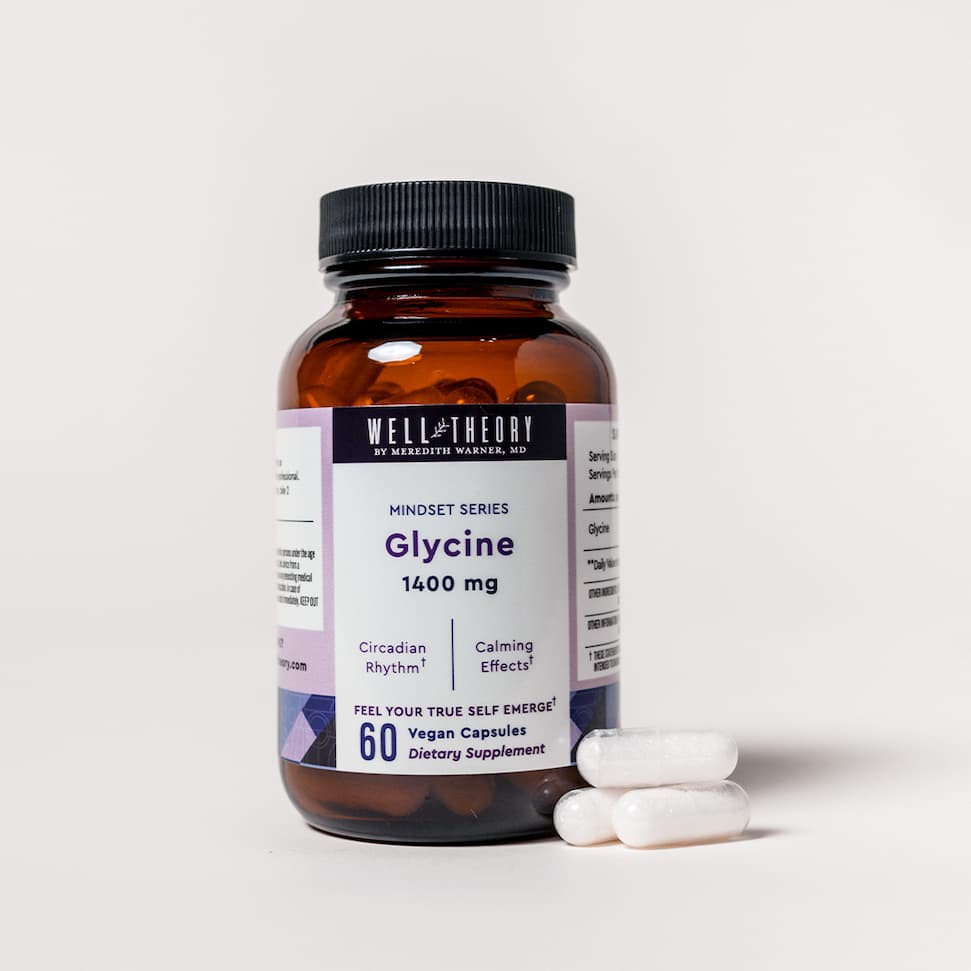
Glycine
Supports a healthy circadian rhythm and overnight collagen synthesis. Most users notice a shift in the 4 to 8 week window. Dr. Warner recommends 90 days of consistent use to evaluate any supplement.
See Glycine →What people say after staying with it.
"The two biggest benefits I've noticed after starting glycine are how well I sleep and how quickly and painlessly I recover from exercise. Both are big, life-improving changes."
"Better than sleepy time tea. I am able to relax and fall asleep within 20 min. of going to bed. No more hours of tossing and turning. Thank you Well Theory!"
"Right away I feel I am sleeping more soundly and deeper."
If three or more of these apply, ask for a sleep panel.
Triggers for a clinical workup.
- You've tried melatonin, magnesium, and good sleep hygiene for 60+ days with no change.
- You wake up gasping, choking, or with a sense that you stopped breathing.
- You snore loudly enough that a partner has commented.
- You feel tired no matter how many hours you slept.
- You take prescription medications and the wake-ups started when one was added.
- You have a known inflammatory condition (autoimmune, arthritis, cardiovascular).
Sleep is where joint repair happens.
If the audit pointed you toward glycine or inflammation, the next step is consistency. Most users notice a shift between weeks 4 and 8. Dr. Warner recommends 90 days of consistent use before evaluating any supplement.
See Glycine More Guides