How PEA Supports Healthy Nerve Signaling

Learn how PEA supports healthy nerve signaling, joint comfort, and inflammatory balance, with clear FDA context and practical routine guidance.
Continue reading
Learn how PEA supports healthy nerve signaling, joint comfort, and inflammatory balance, with clear FDA context and practical routine guidance.
Continue reading
Anti-inflammatory foods can support the environment around everyday movement, but joints still need motion. Food supplies the materials and signaling support, while walking and strength work help move fluid through cartilage and train the muscles that guide the joint.
By Dr. Meredith Warner, MD, board-certified orthopedic surgeon. Reviewed October 4, 2026.
The plate can be beautiful and the chair can still win the day. Joints are not fed by diet alone. They also respond to the ordinary mechanics of walking, standing, bending, and lifting.
Food shapes the environment, but movement delivers the message.
Healthy inflammatory response means the normal signaling the body uses after meals, movement, and daily stress. The goal is balance, not shutting down a normal process.
A joint-friendly menu does not need a special aisle. It needs enough protein, colorful plants, fiber, and fats that support normal function. The boring version is often the one that gets eaten.
The best food pattern for movement is the one that makes the next walk more likely.
Appropriate exercise is not the enemy of cartilage. The better question is dose and progression. Joints tend to prefer a reasonable signal repeated often over sudden heroic weekends.
Joint-friendly exercise is not punishment. It is maintenance with shoes on.
Omega-3 fats belong in the conversation because EPA and DHA are specific fats with roles in normal heart, brain, and inflammatory-response pathways. They are not a replacement for fish, plants, protein, or movement.
Super Omega-3 Softgels provide 1,532 mg total omega-3s per serving, including 892 mg EPA and 640 mg DHA.
A supplement is most useful when it makes a missing piece more consistent.

The goal is not a wellness performance. It is an ordinary day with fewer missed chances to move. Breakfast, a walk, a protein anchor, and a reasonable bedtime can be enough structure to begin.
A joint-friendly day has cues, not commandments.
Anti-inflammatory eating and joint-friendly exercise work best as partners. Food helps shape the internal environment. Movement helps feed cartilage, train muscle, and make the plan visible in daily life.
The body does not separate dinner from the walk after dinner as neatly as the internet does.
A joint-friendly food pattern emphasizes colorful plants, protein, fiber-rich carbohydrates, herbs and spices, and omega-3 fats while keeping movement in the routine.
Appropriate exercise supports strength, function, and cartilage nutrition. The best routine starts with tolerable, repeatable movement and builds gradually.
Food shapes the internal environment, while movement helps move fluid through cartilage and trains the muscle that supports normal joint mechanics.
Omega-3 fats support heart, brain, and healthy inflammatory response pathways. Tart cherry has been studied in exercise recovery routines, but formulas should support the basics rather than replace them.

A surgeon-led guide to the strength routine bones notice, with creatine monohydrate, cholecalciferol, and repeatable weekly habits.
Continue reading
Strong is the new thin because muscle, bone, creatine, and vitamin D3 all belong in a practical daily strength routine.
Continue reading
Hydration is not a contest to finish the biggest bottle on the desk. A steadier habit is to pair fluid with meals, minerals, and water-rich foods so the body can maintain normal fluid balance across the whole day.
That small distinction matters because the best hydration routine is usually boring, repeatable, and attached to things already happening: breakfast, a walk, the grocery cart, and the evening kitchen counter.
Euhydration means the body has enough fluid for normal function without being meaningfully under- or over-hydrated. It is a range, not a single magic number.
Water is the background material for nearly every ordinary day: blood volume, temperature regulation, digestion, nutrient transport, and sweat all depend on fluid being available when the body needs it.
Hydration supports normal fluid balance, temperature regulation, digestion, and everyday physical performance.
The easy mistake is treating hydration as a late correction. The better move is small deposits before thirst becomes the only reminder.
There is no single number that fits every person, every season, and every plate of food. A salad-heavy lunch, soup, fruit, coffee, tea, heat, travel, and a long walk all change the day’s fluid math.
The most useful hydration target is a repeatable pattern that keeps fluid intake steady before, during, and after the busiest part of the day.
Research in adults has examined simple increases in daily water intake, but the lesson for a wellness routine is modest: consistent intake is more realistic than heroic intake.
Water alone is only part of the story. Sodium, potassium, other electrolyte minerals, carbohydrates from food, and the water inside foods all influence how fluid moves through normal tissues.
Water-rich foods make hydration feel less like a chore because they bring fluid, minerals, and texture at the same time.
For a food-first angle, the grocery cart often does more than the motivational water bottle. See our guide to fiber-first grocery habits for the other half of that routine.
Electrolytes are minerals that carry an electrical charge in body fluids. Sodium, potassium, chloride, calcium, and other electrolyte minerals help nerves, muscles, and fluid balance work normally.
Electrolytes matter most when sweat, heat, or long activity changes the day’s fluid losses.
That is the useful middle ground: do not ignore minerals, but do not turn every quiet morning into an endurance event.
Coffee and tea contribute fluid, even though caffeine can have a mild diuretic effect in some contexts. Sparkling water counts too, as long as it helps the routine rather than replacing meals or plain water entirely.
The drink that supports hydration best is the one that fits the day without crowding out food, minerals, or sleep.
For a simple pattern that pairs movement and fluid, the after-dinner walk is still underrated. The habit works because it is small enough to repeat; the same is true for hydration.
Hydration does not need a dramatic rule. It needs a rhythm that puts fluid, minerals, and water-rich foods close to daily life.
A practical hydration habit starts with meals, follows movement, and uses food as part of the fluid plan.
That is less catchy than eight glasses. It is also closer to how real days work.
Eight glasses can be a simple reminder, but it is not a universal requirement. Fluid needs vary with food, heat, activity, body size, and daily routine.
Coffee and tea contribute fluid. Caffeine can influence urine output in some contexts, so the best routine still includes water and meals with fluid-rich foods.
Fruits, vegetables, soups, yogurt, oatmeal, and smoothies can all add water. Produce also brings minerals and fiber that support a practical daily routine.
Electrolytes matter most when sweat losses rise, such as warm weather, longer activity, or outdoor work. Many ordinary days are covered by regular meals.

Joint Comfort
Food-first does not mean food-only. It means the plate gets the first vote, the supplement shelf gets a narrower job, and neither one is asked to do the other’s work.
That distinction matters when daily movement starts sending small signals. Meals supply protein, plants, minerals, fats, and fiber. A targeted formula can support joint comfort and a healthy inflammatory response when the basics are already being handled.
Food-first: a supplement strategy that starts with meals, movement, sleep, and hydration, then uses targeted ingredients to support normal structure and function where the daily routine needs help.
The phrase gets used so often that it can start to sound like a polite way of saying no supplements. That is not how it works. Food-first is a hierarchy. It asks the biggest, most repetitive inputs to come from the things a person does every day: breakfast, lunch, dinner, walks, water, and sleep.
Food-first means the supplement is the specialist, not the meal replacement.
Meals work broadly. Supplements work narrowly. That is the whole point. A Mediterranean-style pattern has been studied for inflammatory biomarkers, but it is not a precision tool. It is a background habit: colorful plants, better fats, seafood, beans, herbs, and fewer ultra-processed defaults.
The plate sets the weather; the supplement helps with one forecast.
A supplement belongs in a food-first routine only if its job is specific. The question is not whether an ingredient sounds impressive. The question is whether it fits the part of the routine that food alone may not cover consistently.
PEA Gummies are built for that narrower role. Each serving lists 300 mg palmitoylethanolamide, 50 mg boswellia serrata extract, and 50 mg bromelain in a strawberry vegan gummy, with a structure/function purpose: supporting joint comfort and a healthy inflammatory response.

Most routines fail because they start too far from Tuesday. The heroic plan asks for an entire new identity. The useful plan asks for one better grocery trip, one walk that actually happens, and one supplement choice that has a clear reason to be there.
The most useful supplement routine begins in the grocery cart, not at checkout.
Fruit is the cleanest example of the food-first rule. Tart cherries are food, but a capsule is a concentrate. Those are related ideas, not identical ones. The fruit brings water, fiber, chewing, and a place on the plate. The extract brings a more consistent way to include Montmorency cherry compounds when the fruit is not in the kitchen.
A concentrate makes more sense when the whole-food habit already has a seat at the table.
Food-first joint support is not anti-supplement. It is anti-random. The plate handles the foundation, and the bottle earns a place only when it has a defined job.
Food-first works best when food does the broad work and supplements do the narrow work.
Food-first means the routine starts with meals, movement, hydration, and sleep before adding a targeted supplement. The supplement still has a role, but it should support a specific structure/function goal such as joint comfort, mobility, or healthy inflammatory balance.
Yes. A supplement fits when the rest of the routine has a foundation and the product has a defined job. Random stacks are the problem, not carefully chosen formulas.
A colorful pattern is the practical starting point: berries, leafy greens, herbs, beans, vegetables, olive oil, fish, nuts, and seeds. Studies of Mediterranean-style dietary patterns have examined changes in inflammatory biomarkers, which is why the overall pattern matters more than one headline food.
Palmitoylethanolamide is a fatty-acid amide studied in joint-comfort research. In the gummy formula above, it is paired with boswellia and bromelain for everyday joint comfort and healthy inflammatory response support.
It can be both. Whole tart cherries are food. The concentrated supplement form is used when someone wants a consistent Montmorency cherry routine for exercise recovery, antioxidant support, joint comfort, and healthy inflammatory balance.

An orthopedic surgeon explains why turmeric alone often falls short for everyday joint comfort, and how turmeric, ginger, PEA, and piperine work together.
Continue reading
Ginger’s best-supported benefits: support for a healthy inflammatory response, antioxidant activity from gingerols and shogaols, and everyday joint and muscle comfort, explained by an orthopedic surgeon.
Continue reading
Inflammatory Balance
Anti-inflammatory foods shape the environment around a joint, but they do not feed the joint itself. That job belongs to movement. Cartilage has no blood vessels of its own, so it draws nutrition from the fluid around it, and that fluid only circulates under load. The plate and the walk are two halves of one routine, and the joints that feel best in the research are the ones getting both.
The body runs inflammatory signaling as a repair system: it rises where tissue needs attention, then resolves when the work is finished. An anti-inflammatory eating pattern supports the body in keeping that rhythm tidy over the long run, and joints sit closer to that rhythm than most tissues because they depend on the fluid environment around them.
The catch: none of this reaches cartilage on its own. Lowering the inflammatory load creates a calmer environment, but the tissue inside the joint still has to be fed, and food cannot do that part.
Cyclic loading: the compression-and-release cycle a joint goes through with every step. Load squeezes fluid out of cartilage; removing the load lets fresh, nutrient-carrying fluid draw back in. For a tissue with no blood vessels, this cycle is the delivery system.
Cartilage is avascular, which means it has no capillaries delivering groceries. Its nutrition arrives by diffusion from synovial fluid, and movement is what circulates that fluid through the tissue. In classic laboratory work, human cartilage plugs subjected to a simulated walking cycle moved large nutrient molecules 30 to 100 percent faster than identical tissue sitting still.
The worry people carry into this conversation is that loading a joint wears it down. The research says otherwise: systematic reviews of randomized trials report no evidence of cartilage wear from appropriately dosed exercise, and some measures of joint health improved with training.
It does, and one trial made the point cleanly. In an 18-month randomized study of adults carrying extra weight with knee concerns, participants were assigned to diet alone, exercise alone, or both. The diet group lowered a key circulating inflammatory marker the most; the exercise group moved better. The combined group did best overall on function and mobility, outperforming both single-approach groups.
The trial’s dose is worth copying in spirit: not a heroic program, just a steady walking plan, some strength work, and a plate built around fish, olive oil, and vegetables.
Even a good plate has gaps, and two categories earn their spot in a joint-friendly routine.
Super Omega-3 Softgels list their amounts openly: 1,532 mg of total omega-3s per serving, including 892 mg of EPA and 640 mg of DHA, in 60 softgels.*
Dr. Warner formulated them for exactly the gap the modern plate leaves: the fats a joint-friendly eating pattern calls for, in stated doses rather than a proprietary blend.
Tart Cherry Extract concentrates 1,500 mg of tart cherry fruit into one vegan capsule, no juice to keep refrigerated.*
Tart cherry supports exercise recovery, joint comfort, and a healthy inflammatory response, which makes it the capsule that belongs after the walk is already on the calendar.*

Anti-inflammatory food and joint-friendly exercise are two halves of one routine, and the research is clearest where they overlap: a calmer inflammatory environment from the plate, fed cartilage and capable muscles from the movement. Start with the walk, build the plate around fish, olive oil, and vegetables, and let Super Omega-3 Softgels and Tart Cherry Extract fill the narrow gaps.
For the deeper playbook on the eating side, start with eat the rainbow, then fill the gaps, and for the movement half, the research-backed case is in why muscle matters after 50.
It helps with one half. Eating patterns influence the inflammatory environment around joints, which matters over months and years. But cartilage is fed by movement, not by food alone, so the research keeps pointing to diet and exercise together as the combination that outperforms either alone.
Fatty fish such as salmon, sardines, and mackerel; extra virgin olive oil; berries; leafy greens; legumes; nuts; and colorful vegetables. The consistent finding is about pattern: these foods working together, with refined carbohydrates and excess omega-6-rich processed oils limited, is what tracks with lower inflammatory markers.
Yes, it is the base layer. Walking loads the hip, knee, and ankle joints through thousands of gentle compression-and-release cycles a day, which is the mechanism that circulates fluid through cartilage. Adding two short strength sessions a week builds the muscles that shield the joints and rounds out the routine.
Reasonable expectations live on the scale of months, not days. The landmark diet-plus-exercise trial ran 18 months; its participants were not promised quick changes and neither is anyone honest. Supplements follow the same clock as habits: judge the whole routine over 90 days of consistency, which is Dr. Warner’s standard evaluation window.
No supplement replaces the plate. Fish adds protein, minerals, and a whole food matrix alongside the omega-3s. A softgel with stated EPA and DHA amounts is how many adults reliably reach a consistent daily intake of the specific fats the research tracks, on weeks when salmon does not happen twice.

Joint Comfort
What helps with stiff joints is whatever supports the three systems that run them: the fluid environment inside the joint, the cartilage that cushions it, and the muscles that protect it. Stiffness after a long drive, a movie, or a full night in bed is rarely one worn-out part asking for help. It is usually the whole system asking for better daily support, and that is good news, because all three systems answer to ordinary habits.
The short answer is physics on top of biology. A healthy joint is lubricated by synovial fluid, and after a stretch of stillness that fluid settles and thins at the surfaces. Motion circulates it again, which is why the first steps after a long movie feel creaky and the twentieth feel fine.
Synovial fluid: the joint’s built-in lubricant. Produced by the joint lining, it carries nutrients to cartilage, keeps the surfaces gliding, and circulates with movement. Stillness lets it settle, which is one reason a body feels stiffer after a long drive than after a walk.
The body runs a repair crew that is supposed to arrive, finish the work, and leave. Inflammatory signaling is that crew, and a comfortable joint depends on the rhythm staying tidy: signals rise when tissue needs attention and resolve when the job is done. Daily habits shape how well that rhythm holds.
The inflammatory rhythm is a lifestyle outcome, not a single meal or a single capsule. Food does the daily work, and a focused formula can round out the parts a normal week misses.
Joint Health Multi brings 1,000 mg of turmeric root extract standardized to 950 mg curcuminoids, 1,000 mg of ginger root extract, and 300 mg of PEA into a two-capsule serving, with piperine included to support absorption.*
PEA has been studied for everyday comfort in double-blind randomized trials, and turmeric and ginger are two of the most researched botanicals on the joint-comfort shelf.* Dr. Warner formulated the serving to run alongside the food-first plate, not instead of it.

Cartilage is fed almost entirely by diffusion from the fluid around it, and it has a delivery mechanism hiding in plain sight: movement. Loading a joint compresses the tissue, and releasing the load lets it draw fresh fluid back in.
The second half of the story is material. Cartilage is built from collagen and glycosaminoglycans, and eggshell membrane carries a strikingly similar parts list: collagen, elastin, and glycosaminoglycans including chondroitin and hyaluronic acid.
In a two-week randomized trial, 500 mg of eggshell membrane per day kept a marker of cartilage turnover lower than placebo in healthy postmenopausal women following a stair-stepping regimen, with recovery from exercise-related stiffness responding within the first week. The trial used the exact branded ingredient and dose found in the gummies below.
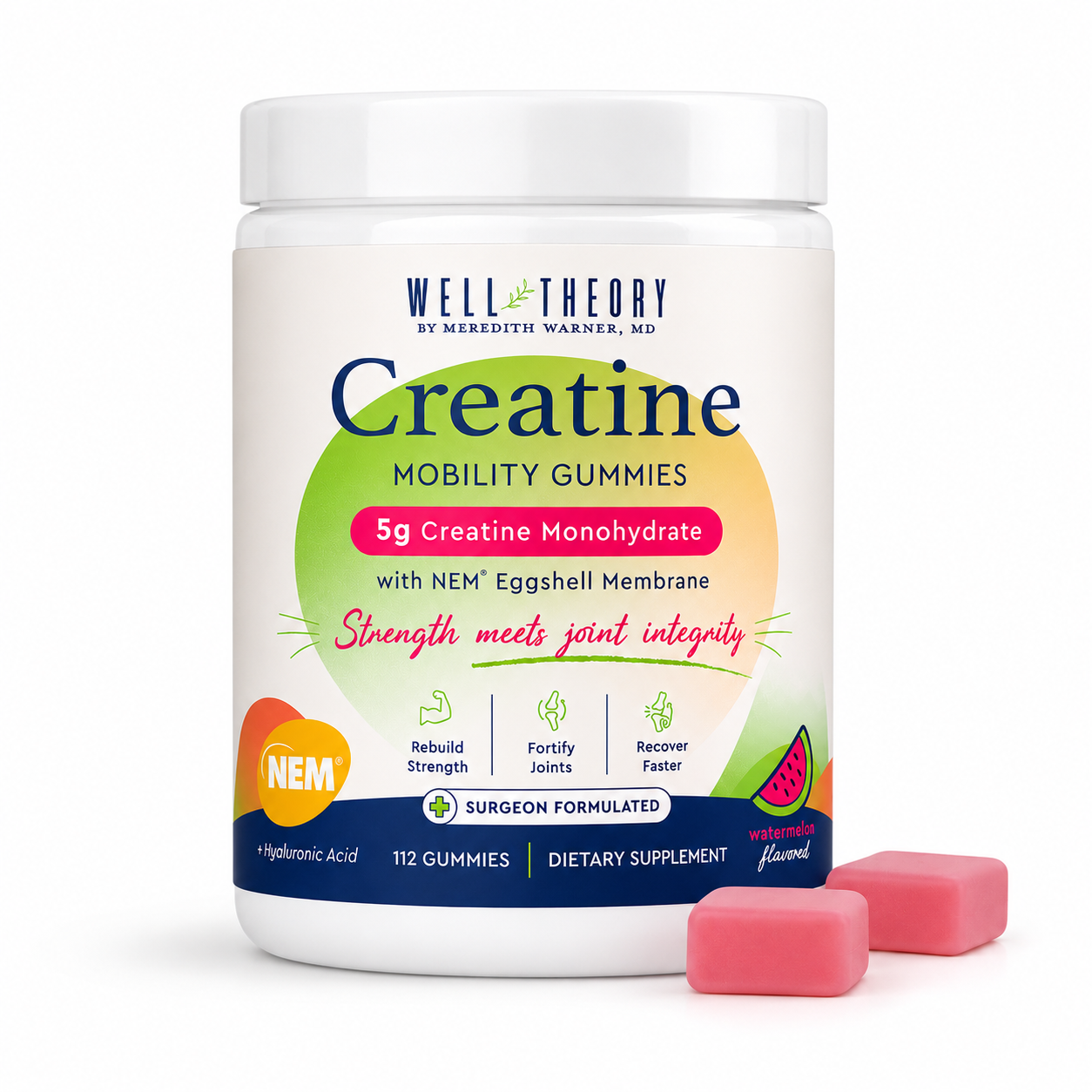
Creatine + NEM Mobility Gummies pair 5 g of creatine monohydrate with 500 mg of NEM eggshell membrane, plus hyaluronic acid and vitamin C, in a four-gummy serving.* Creatine supports strength and training recovery, and the eggshell membrane supplies the raw-material side of the joint routine in the same serving.*
It is the formulation equivalent of the two-part lesson above: load the joint well, then give it the parts list.
Muscles are the joint’s suspension system. When they are strong, they absorb force before it reaches cartilage; when they fatigue, more of every step lands on the joint itself. That is why strength work is joint work, whatever the mirror has to say about it.
For the full case for keeping muscle through the fifties and beyond, the research-backed playbook is in why muscle fades after 50 and the walk that slows it.
What helps with stiff joints is support for all three systems: a tidy inflammatory rhythm, cartilage that gets daily delivery through movement plus raw materials, and muscles strong enough to take the load. Food and walking do most of the work.
Focused formulas fill the gaps: Joint Health Multi for the botanical-and-PEA side of the routine, Creatine + NEM Mobility Gummies for strength and raw materials together, and Tart Cherry Extract for exercise recovery and a healthy inflammatory response after the active days.*
The easiest first step needs no equipment at all: an after-dinner walk puts the compression-and-release cycle on the calendar every evening.
Gentle movement first, before demanding anything of the body. Slow range-of-motion exercises, a warm shower, and an easy walk all circulate synovial fluid, which is the system the stiffness is asking for. The first ten minutes are usually the hardest and the fastest to improve.
Yes. Stillness lets synovial fluid settle and cartilage lose a little of its temporary plumpness, so creakiness after a long sit is the expected behavior of the system, not a verdict on the joint. Ease of movement returning within a few minutes of walking around is the healthy pattern. Stiffness that persists or worsens deserves a conversation with a qualified professional.
No supplement built on natural compounds works by morning. They work by being present, day after day, while the systems they support do their slow work. The 90-day window exists because judging a routine at week two tells a person close to nothing about week twelve.
Not when it is dosed sensibly. Systematic reviews of randomized trials report no evidence of cartilage wear from appropriately prescribed exercise, and some measures of joint health improved. The keys are low-impact movement, gradual progression, and consistency rather than intensity.
Fatty fish, extra virgin olive oil, berries, leafy greens, legumes, nuts, and colorful vegetables form the core of an anti-inflammatory eating pattern, while limiting refined carbohydrates and excess omega-6-rich processed oils. Eating patterns count more than any single food or single meal.

Everyday Mobility
Somewhere in your fifties, the body quietly changes how it handles muscle. The same stairs, the same groceries, the same Saturday that used to leave you tired but intact now leaves something behind: a little less of the muscle you were spending. Muscle is being lost at roughly half a percent to one and a half percent per year between 50 and 80, and strength slides faster than size. But the process is not a verdict, and the single most underrated intervention is free: a walk.
The biology is well mapped. Muscle protein synthesis, the process that repairs and rebuilds fibers after use, becomes less responsive to both food and exercise with age, a shift researchers call anabolic resistance. Hormonal signals that once supported maintenance drift lower. Fast-twitch fibers, the ones that generate quick force, become progressively denervated, and their workload gets silently reassigned to slower fibers. Meanwhile, the repair crews that clean up damaged fibers lose efficiency.
People eating on a smaller appetite can find the per-meal protein arithmetic in eating enough when hunger shrinks.
Longitudinal research puts numbers on the drift: people around 75 lose muscle at measured rates of about 0.64 to 0.7 percent per year in women and 0.8 to nearly 1 percent in men. Between 50 and 80, the commonly cited range is 0.5 to 1.5 percent per year. Scaled to a decade, that is a meaningful chunk of the engine that carries groceries, opens jars, catches a stumble before it becomes a fall.
The part most people miss is the order of events:
Anabolic resistance: the age-related decline in how strongly muscle responds to the two signals that build it, protein from meals and the mechanical load of exercise. An older muscle needs a slightly bigger, more deliberate version of the same signals to get the same rebuilding response.
Here is the honest part: walking is not resistance training, and it does not by itself rebuild the fast-twitch fibers that thin first. Anyone selling a stroll as a complete strength program is overselling. But walking protects the foundation that strength work stands on, and it is the part of the plan most likely to survive contact with real life.
The full plan is unglamorous: lift something heavy twice a week, eat enough protein at meals, and walk most days. The three parts cover the signal, the material, and the delivery system. Here is what that looks like as an actual week, with the walk dose spelled out.
The dose that shows up in the research on walking and healthy aging is roughly 30 minutes a day, most days of the week, which at a moderate pace is about 1.5 to 2 miles. Brisk counts more than long: a pace where talking is possible but singing is not. Three 10-minute walks stack the same as one 30-minute walk, so the dose can be split across the day, and at 50-plus that split is often easier on joints and schedules. Dr. Warner’s after-dinner version is the one most people actually keep, because it anchors to a meal instead of to willpower.
This is the direct building signal, and it does not require a gym. Bodyweight squats to a chair, step-ups on stairs, wall push-ups, and a resistance band row cover the major muscle groups. Two sessions a week is the floor in the studies on resistance training in older adults; the movements should be slow enough to control on the way down, because the lowering phase is where much of the stimulus lives. Creatine’s research base sits on top of exactly this kind of consistent training, not on rest.
Anabolic resistance means the same portion does less at 62 than at 32, so the practical move is distributing protein rather than concentrating it at dinner. A palm-sized piece of fish or chicken, eggs with breakfast, Greek yogurt, or beans and rice all land in range. For people whose appetite makes three solid meals difficult, protein-first eating, starting the plate with the protein before the sides, is the highest-leverage habit.
| Day of the week | Walk | Strength | Protein focus |
|---|---|---|---|
| Monday | 30 min brisk | Session 1 | Protein at breakfast |
| Tuesday | 30 min or 3 x 10 min | Rest | Normal day |
| Wednesday | 30 min brisk | Session 2 | Protein after training |
| Thursday | 30 min or 3 x 10 min | Rest | Normal day |
| Friday | 30 min brisk | Optional light session | Protein at breakfast |
| Saturday | Longer easy walk, 40 to 60 min | Rest | Weekend meals count too |
| Sunday | Easy walk, any length | Rest | Plan the week’s protein |
Creatine is the most researched supplement in the muscle-maintenance conversation, and the trials in adults over 50 are consistent in direction. Systematic reviews report that creatine alongside resistance training produces greater gains in strength and lean tissue than training alone in older adults, with the effect strongest when training is actually happening.
Dr. Warner formulated the Creatine + NEM Mobility Gummies for exactly this chapter of life: creatine to support muscle strength and recovery, paired with eggshell membrane for everyday joint comfort, so the training that protects muscle does not punish the joints doing it.
Anabolic resistance means the same chicken breast does less at 62 than it did at 32. The practical answer is not complicated: spread protein across the day rather than concentrating it at dinner, and make sure each meal carries a real portion, roughly 25 to 40 grams, rather than a garnish. Older adults who maintain muscle are, in study after study, simply the ones eating enough of it. For people whose appetite makes that difficult, eating enough on a smaller appetite has its own playbook.
Muscle loss after 50 runs roughly half a percent to one and a half percent per year and accelerates with inactivity, but it responds to signals the way muscle always has. A daily walk keeps the system running, twice-weekly resistance work sends the building signal, protein supplies material, and creatine is the best-studied supplement support for the strength work. The earlier the habits start, the more muscle there is to work with, and the habits that win are the ones still standing in ten years. For readers past 60 looking for the easiest entry point, strength training can start with grip strength, using nothing more than a rubber ball and the grocery bags already in the car.
Roughly 30 minutes at a brisk pace, most days of the week, is the dose supported in research on walking and healthy aging, which works out to about 1.5 to 2 miles. Splitting it into three 10-minute walks works just as well, and for many people over 50 the split version is easier to keep.
Muscle protein synthesis becomes less responsive to food and exercise, supportive hormonal signals drift lower, and fast-twitch fibers lose nerve connections. The combined effect is a typical loss of 0.5 to 1.5 percent of muscle per year between 50 and 80.
Walking maintains the slow-twitch endurance fibers used for posture and daily movement and supports healthy glucose metabolism, but it is not a substitute for resistance training, which provides the direct building stimulus. The strongest results come from walking plus twice-weekly strength work.
Multiple systematic reviews and meta-analyses report greater strength and lean-tissue gains when creatine is combined with resistance training in older adults, compared with training alone. The benefits are strongest when actual training is part of the routine.
Research on older adults supports roughly 25 to 40 grams of protein per meal, spread across the day, to overcome the reduced responsiveness of aging muscle. Total daily intake matters more than any single meal.
Longitudinal studies commonly cite 0.5 to 1.5 percent per year across that age range, with measured rates around 75 of roughly 0.64 to 0.98 percent per year depending on sex. Inactivity accelerates the loss considerably.
If you have looked at the ingredient list on the Creatine Mobility Gummies, you may have noticed an ingredient called NEM eggshell membrane and wondered what it is doing inside a creatine product. Eggshell membrane is the thin, fibrous layer between the shell and the white of a chicken egg, and researchers have been studying it for years as a source of compounds that support joint comfort, flexibility, and connective tissue health.
By Dr. Meredith Warner, MD, board-certified orthopedic surgeon. Reviewed September 22, 2026.
Every chicken egg has a thin, barely visible layer between the hard outer shell and the liquid white. That layer is the eggshell membrane. It is mostly protein (about 90 percent) and contains the same types of structural compounds your body uses in joints, skin, and connective tissue: collagen, hyaluronic acid, chondroitin sulfate, and other glycosaminoglycans.
If you have ever peeled a hard-boiled egg and noticed that thin, papery layer that sticks to the shell, you have held eggshell membrane in your hand. That same material, when processed into a supplement form, is what researchers call NEM (Natural Eggshell Membrane). It is not a novel lab-made compound. It is a natural biological structure that happens to contain molecules your body recognizes and uses.
A family of long-chain sugar molecules that play a structural role in connective tissue. Hyaluronic acid, chondroitin sulfate, and dermatan sulfate are all GAGs. They help support hydration, cushioning, and resilience in joints and skin.
Eggshell membrane has been studied in two main directions: as an oral supplement for joint comfort and as a topical biomaterial for wound healing and skin regeneration. For joint support, the research focuses on NEM, the standardized, branded form of eggshell membrane used in clinical trials.
Multiple randomized controlled trials have examined 500 mg of NEM per day for knee joint stiffness, flexibility, and function. In one study, participants taking NEM reported measurable improvements in stiffness and comfort assessments as early as 10 days, with continued evaluations at 30 and 60 days. The ingredient works through the natural compounds it provides rather than through a synthetic drug pathway.
The mechanism is straightforward: eggshell membrane delivers a naturally occurring matrix of collagen, GAGs, and other bioactive compounds that are the same building blocks your body already uses for connective tissue maintenance. Supplementing with those building materials supports the body’s own repair and maintenance processes.
The Well Theory Creatine Mobility Gummy pairs creatine monohydrate with NEM eggshell membrane for a practical reason: strength and joint comfort are not separate goals. If you are working to maintain muscle after 40, your joints need to tolerate the movement that builds that muscle. Creatine supports muscle energy and strength; NEM supports the joint environment where that strength is used.
This pairing is deliberate. It is not a random combination of trending ingredients. The formula was designed by an orthopedic surgeon who sees the movement system as a connected whole: muscle, tendon, ligament, cartilage, and joint fluid all need support together, not one at a time.
For more on how creatine and joint support work together, see the full article on creatine for strength and joint mobility after 40.
Each gummy serving provides 5 g creatine monohydrate with 500 mg NEM eggshell membrane, hyaluronic acid, and vitamin C. Designed for adults 40+ who want daily support for strength, mobility, and joint comfort in one routine.
Eggshell membrane is not a mystery ingredient. It is a natural material packed with collagen, hyaluronic acid, and other structural compounds that your joints and connective tissue use every day. In the Creatine Mobility Gummy, it plays a specific role: keeping the joint environment supported while creatine supports the muscle. Read the label, understand the ingredient, and decide whether the pairing fits your routine.
Eggshell membrane is the thin, fibrous layer located between the eggshell and the egg white. It contains collagen, glycosaminoglycans, hyaluronic acid, chondroitin sulfate, and other bioactive compounds being studied for joint comfort and connective tissue support.
NEM stands for Natural Eggshell Membrane. It is a branded form of eggshell membrane used in dietary supplements and studied in clinical trials for joint stiffness, flexibility, and everyday mobility support.
The Well Theory includes NEM eggshell membrane in the Creatine Mobility Gummy so that muscle support and joint support come in one daily routine.
Eggshell membrane contains collagen types I, V, and X along with glycosaminoglycans, hyaluronic acid, and other compounds. It is not just collagen but a broader matrix of connective tissue nutrients.